What the pilots taught us
Over the past few years communities across New Zealand, Australia and the UK have been using hum to govern shared funds. Our original model, which we now call Gov1, is direct democracy. Every member can create a proposal to spend a shared treasury, resulting in microgrants streaming into the community. Every member has an equal say. We've shown that with the right conditions and support it works beautifully.
But as we ran more pilots, a pattern emerged. In some communities there was clearly a subset of people with the time, energy and capability to engage more deeply with decisions. And there were many others who had little time, and were happy to delegate decisions to others. We introduced delegated voting which partially helped but didn't address the core issue.
Asking everyone to evaluate everything wasn't empowering them. It was exhausting them. So we set about building a representative democracy for the hyperlocal community group.
The old problems, at a new scale
The moment you introduce representation, you inherit the problems every democracy has wrestled with for centuries. Once people are elected, how do you keep them honest? How do you keep them motivated? How do you stop a small group entrenching itself? How do you remove someone who has lost the community's confidence without waiting years for the next election?
Big democracies answer these questions badly. Fixed terms mean accountability arrives in three to four year instalments. Money buys influence. Incumbents entrench. Voters get one blunt signal, occasionally.
We had a chance to answer these questions differently. We called the result Gov2.
How Gov2 works
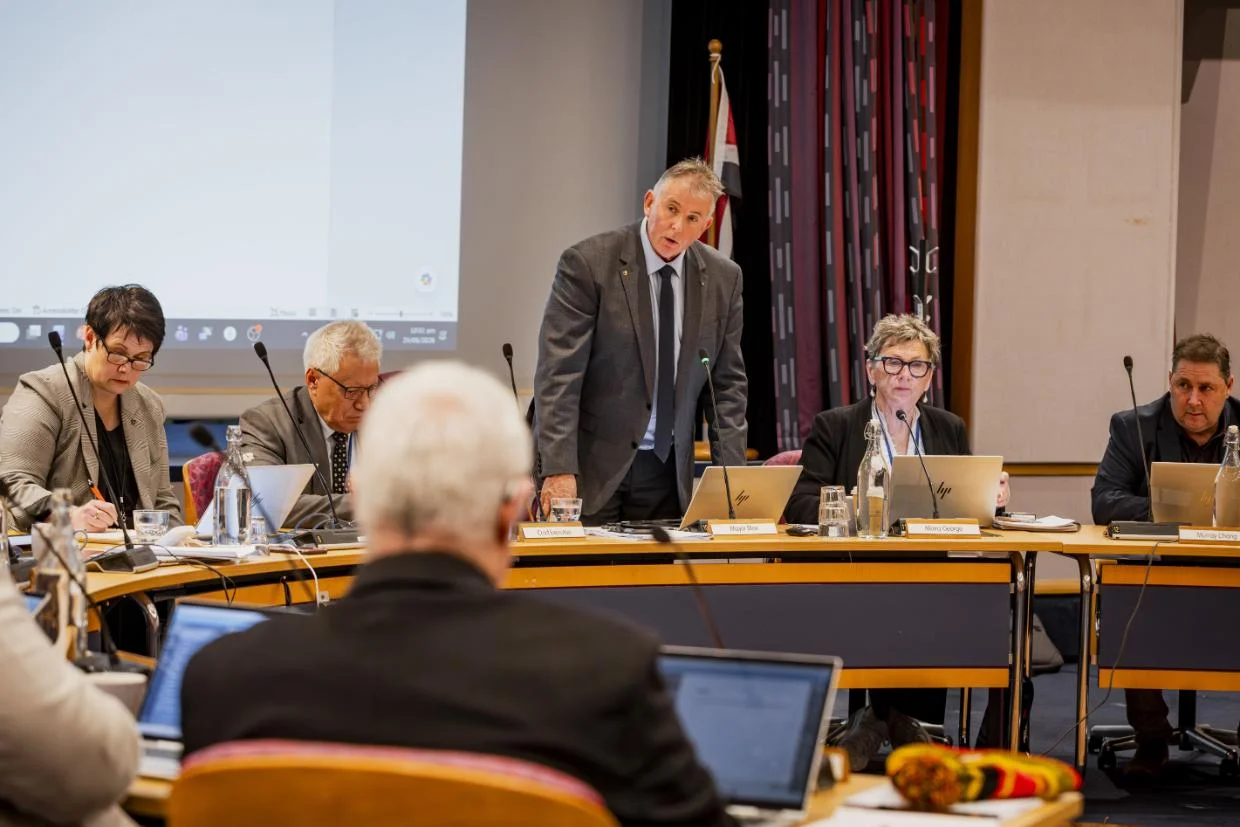
Community groups initially elect a small council of stewards to make decisions about a shared treasury on their behalf. Anyone can put themselves forward to be a steward. But four design choices make this unlike any democracy you've voted in.
Trust is continuous, not periodic. Members don't cast a vote and walk away for a term. They allocate ongoing support to the stewards they trust, and they can move it at any time (we recalculate preferences every 60 seconds). A steward's power is a live signal of community confidence, not a mandate banked years ago.
Influence builds slowly. Support doesn't count at full strength the moment it's given. It ramps up over weeks or months. This is called conviction voting, (essentially a time dampening effect) and it means the council can't be captured by a flash mob or a single coordinated afternoon. Shifting power takes sustained, genuine support. Persistence counts.
Nobody can buy the council. Members allocate support using quadratic voting. Backing one candidate heavily gets expensive fast, while spreading support across several is cheap. A wealthy faction can't simply pile in behind one person. Broad trust beats concentrated force.
Unpopular stewards leave automatically. The system takes a daily reading of community confidence. Stewards who sit at the bottom for a sustained period retire automatically, and the most trusted new candidates are invited to take their place. There is no permanent elite. Lose the community's trust and your influence decays, then your seat goes with it. No scandal required. No election night. Just a steady, honest signal.
Stewards create proposals to spend the monty. They then vote on these proposals, with their voting power weighted by the community trust they hold. Small spends need a modest bar of approval. Big ones need broad consensus. Passed proposals are funded instantly from the community treasury and every movement of money is visible to everyone. Stewards report on progress in real time. Transparency is baked in.
Why this matters beyond the neighbourhood
Hold Gov2 up against the democracies we live in and the contrast is stark.
Imagine a parliament where a representative's voting power reflected the live confidence of their constituents. Where losing public trust meant losing influence within weeks or months, not surviving until the next election years away. Where money couldn't concentrate power because the voting maths made it prohibitively expensive. Where nobody could entrench, because the system itself rotated out anyone the community stopped believing in.
We're not claiming a neighbourhood fund is a nation state. The stakes, scale and complexity are different. But democratic innovation has to start somewhere, and it almost never starts in the huge centralised institutions made up of people with power to lose. It starts at the edges, in places small enough to try something new and honest enough to learn from it.
That's what hum communities are doing right now. They're not just deciding how to spend a shared fund. They're field-testing answers to questions democracies have been asking for hundreds of years.
Representation without entrenchment. Delegation without capture. Accountability that never sleeps.
That's Gov2. And we think the implications run a long way past the neighbourhood.