Beyond big government and big corporations
In the pursuit of efficiency and “economies of scale,” we’ve centralised power in ways no previous civilisation ever has. Decision-making has migrated upwards - into large public institutions, corporates and global markets - while the agency of ordinary people and neighbourhoods has eroded.
In just a few generations communities, especially the most marginalised and disadvantaged have lost power, voice and control. The result is not just inequality of income, but inequality of influence, belonging, and dignity.
The Current Blind Spot
Humans evolved in hyper-local, place-based groups - villages, hapū, tribes - where wellbeing depended on social cohesion, shared norms, kinship, ritual, and reciprocity. But our current economic system elevates only one form of value: financial capital. Other forms of capital - social, cultural, intellectual, experiential, spiritual, and ecological - barely register in mainstream economic accounting.
Indigenous societies, and many non-Western cultures, are better at recognising these wider forms of value. They understand that wealth is relational and collective; that wellbeing comes from connection, care, meaning, and contribution. Raghuram Rajan elegantly describes this in his seminal book The Third Pillar: when the community pillar is weakened, the market and the state become unbalanced and extractive. Communities lose the power to shape their own futures.
The Idea: A Parallel System Rooted in Community
Four years ago, a handful of us began imagining a different world - one where communities become producers of value again, not just recipients of services. Where the “rules of the game” change so that hyper-local groups can more easily access resources, govern themselves, and build shared assets.
The Wellbeing Protocol began as a research project exploring whether a commons-centred approach, combined with Web3 infrastructure (Web3 uses decentralisation to let people share information and value without relying on any single company, making the system more fair, open, and resilient) and new governance patterns, could make this real. After initially experimenting with community currencies, we refocused on the community grant system. As a first, but critical step towards community empowerment we set out to solve some key challenges for the participants in the current system:
Local community groups (typically between 15-50 people) wanting to work together to do good. Based on the principle eloquently described by Nobel prize winning economist Elinor Ostrom that the people on the spot have the strongest incentive to get the solution right - could we create a workflow / governance tool that allowed them to democratically decide where financial resources were allocated?
Funders - the people and organisations with financial resources to do good. This could be philanthropy, government, local businesses or the general public. Could we not only create a hyper-efficient, transparent and incorruptible way for them to fund large numbers of hyper local groups but could we also give them a greater sense of connection with what they are funding.
Partners - the individuals and organisations that sit in between the funders and community. These are the local charities, social enterprises often with decades of experience supporting marginalised / underprivileged communities. Could we build tools that reduced the time they spent fund raising and admin, and allowed them to amplify their impact.
What We Learned
It’s been quite a journey. A few reflections so far:
Impact-driven innovation is hard to fund. Venture-style funding chases profit; funding for public good digital infrastructure is really hard to come by. We’ve lived this tension.
Change moves at the speed of trust. Communities - especially those underserved or marginalised - require careful, patient, relational work. Technology cannot shortcut trust.
Technology alone is insufficient. Local organisations with cultural competence and deep relationships are essential. They are the real backbone; the technology simply amplifies their capacity.
Despite the challenges, we’ve been very fortunate to receive belief and support from visionary people and organisations including The Ethereum Foundation (Switzerland), Rod Drury, Menzies Foundation (Australia), Helmut Modlik (Ngāti Toa), Callaghan Innovation, Sport NZ, Westpac Government Innovation Fund, Regen Melbourne and Creative HQ. This support has allowed us to collaborate, build and run 15 pilots in three countries, get international media attention and prove that the model works.
What Has Emerged: hum.community
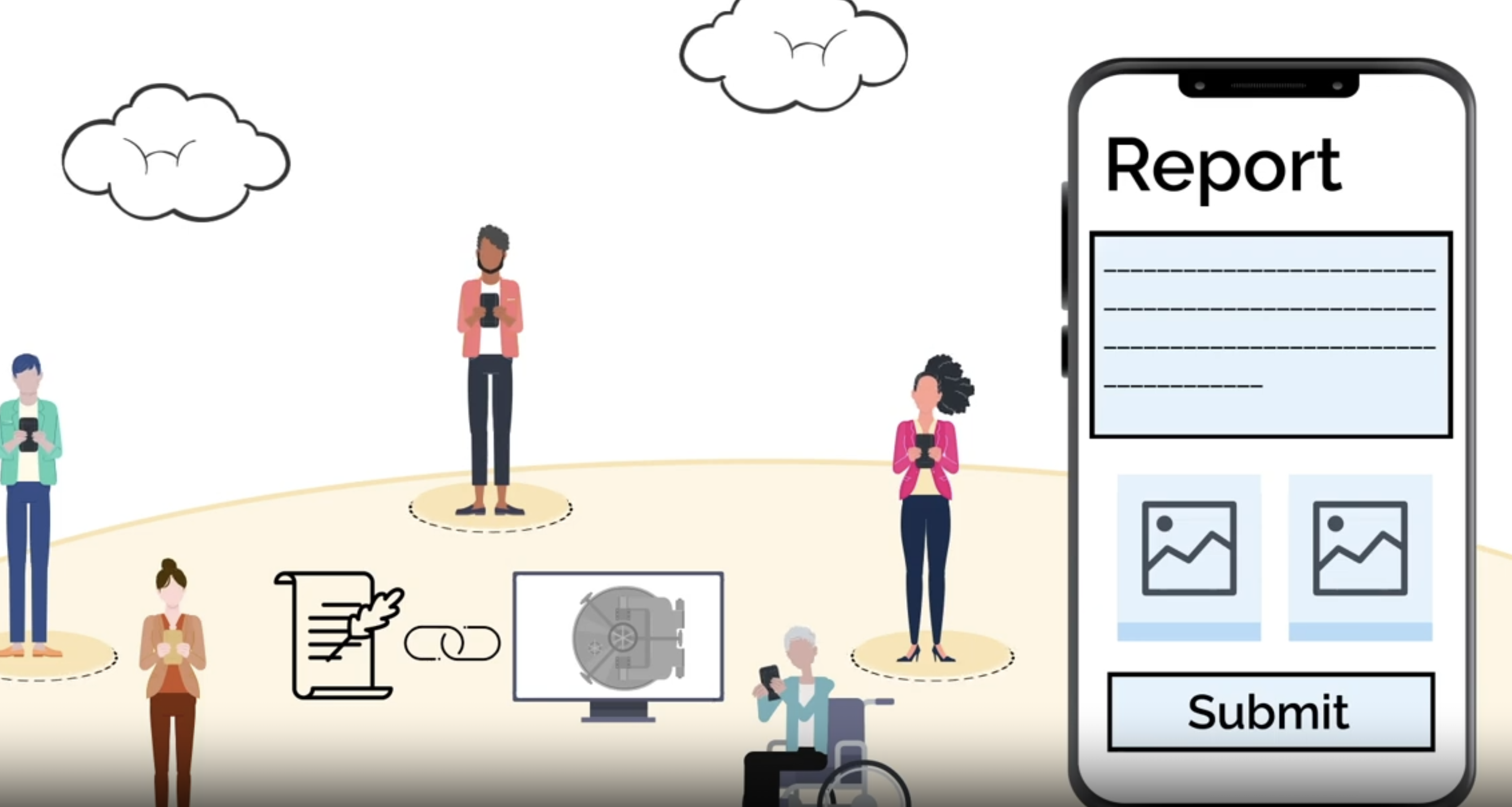
Our first product, hum.community, is a transparent, fast, community-led micro-granting system designed to build trust between community groups, funders and partner organisations.
It is simple but radical: let the community propose and decide how small grants are used, with technology and processes ensuring the transparent flow of money and information, aligned incentives and accountability. No paperwork. No competitive funding rounds. No central committee making decisions on behalf of people who actually live the reality.
For example - one of our first pilots was centered around Maori men's health in Lower Hutt. With support from the Marae (Partner) the men created a constitution (the rules / boundaries of the fund) that was agreed to by the funder (a government agency). Money was then streamed into their treasury, with the technology allowing the men to come up with ideas and democratically stream micro grants out to individuals in that community.
The Bigger Vision: A New Kind of Local Economy
Hum.community is not just a grant tool. It’s the seed of a parallel economic system - one where every participant uses a unit of value (token) that can only be used for social good. The more funders, partners and communities that join, the stronger and more attractive the economy becomes to others.
Picture this:
A funder logs into a dashboard, filters by location and theme (e.g. youth, environment, mental health) and in a few clicks starts streaming money instantly to dozens or hundreds of groups - getting real-time visibility on impact.
A local “re-green the street” group publishes its constitution and starts receiving micro-grants from local businesses, philanthropists and international supporters.
A local 8 person charity is able to train 20 community stewards and support and fund hundreds of local community groups to help it achieve its mission.
A government agency or philanthropist using the anonymised real-time data from thousands of communities to make strategic funding decisions.
And beyond micro-grants:
And this is just the beginning. Once trust and engagement are established, communities can begin to own assets - shared spaces, gardens, tools, solar infrastructure, government bonds - that could create long-term community income (so that they reduce their dependency on external funders). These groups start to resemble mini, democratic cooperatives or, in Web3 language - Decentralised Autonomous Organisations (DAOs).
Imagine thousands of these self-governing local entities interconnected. A Network Nation built from the bottom up - not replacing existing nations, but offering a counterweight to the current economic system.
Imagine a world where communities - not corporations or bureaucracies - become the primary unit of social and economic power again.